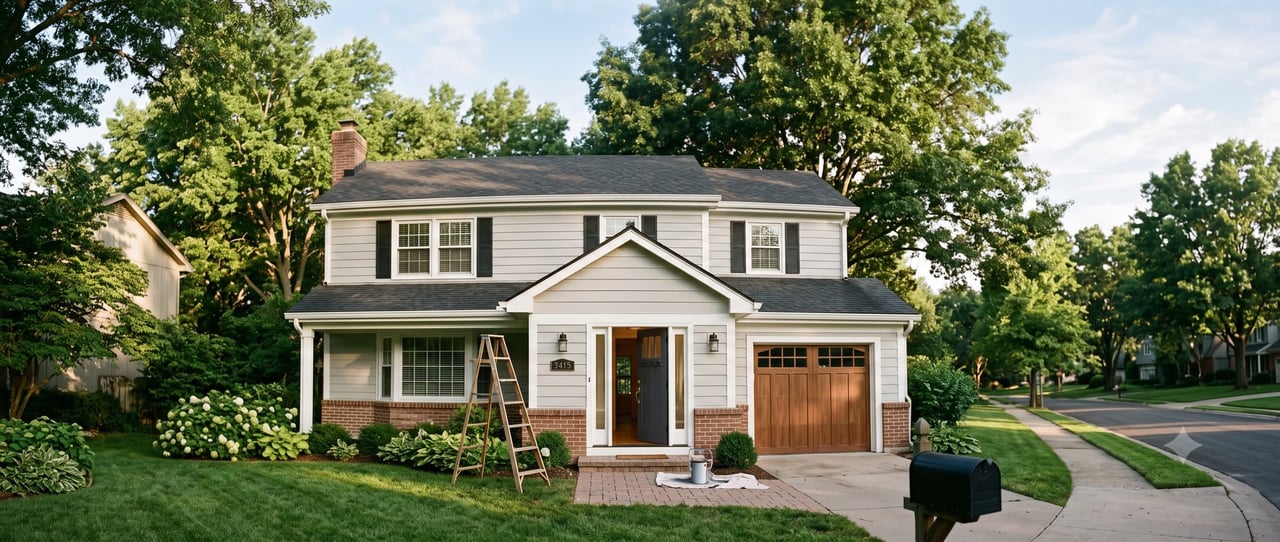
Every seller asks some version of the same question in our first walkthrough: what to fix before selling a house, and what can be left alone? It is the right question, because the answer decides whether you spend a focused few thousand dollars that comes back at closing or a scattered fifteen thousand that a buyer never notices.
In Johnson County, the answer is more specific than the national advice suggests. Buyers here shop in polished markets like Leawood, Overland Park, and Prairie Village, where well-kept listings set the standard, and local inspectors know exactly where Kansas City homes tend to show their age. After helping sellers across the metro prepare hundreds of listings, our team has a clear picture of which repairs protect your price, which ones inspectors flag again and again, and which projects you can confidently skip.
Here is the checklist we walk through with our own sellers, organized the way we actually work: what inspectors will find, what buyers will see, and what staging can handle for you.
Start With What Johnson County Inspectors Flag Most
An inspection surprise in week two of a contract costs you more than the same repair handled before listing, because by then the buyer is negotiating from leverage. These are the items that come up repeatedly in Kansas City area inspections.
Radon. Radon testing is close to standard practice in Johnson County transactions, and elevated results are common enough here that local agents treat the test as a given rather than an add-on. Testing ahead of time is inexpensive; the Johnson County K-State Research and Extension office in Olathe sells short-term test kits for about fifteen dollars, according to the county's own resources. If your result comes back high, installing a mitigation system before you list turns a scary inspection line item into a selling point. A mitigated home with documented results reads as well cared for.
Foundation and drainage. Much of the Kansas City metro sits on expansive clay soil that swells when wet and shrinks in drought, which is why local foundation companies stay busy and why inspectors here look hard at basement walls, floor cracks, and grading. Hairline cracks are normal and rarely alarming. What you want to address before listing: downspouts dumping water at the foundation, soil sloping toward the house, a sump pump that has quit, and any crack you can see daylight or moisture through. Extending downspouts and regrading a low spot are modest projects that prevent expensive conversations later.
HVAC service records. Kansas City summers and winters both work a system hard. A pre-listing service call with a dated receipt taped to the furnace answers the question before a buyer's inspector raises it.
Roof and hail history. Hail moves through the metro regularly, and buyers' insurers increasingly scrutinize roof age. Know the age of your roof, gather any documentation from past claims or replacement, and have missing or lifted shingles repaired. You are not necessarily replacing a roof to sell; you are removing uncertainty.
Room by Room: What to Fix Before Selling a House Here
Kitchen
Skip the remodel. Focus on function and finish: repair the dripping faucet, replace the burned-out bulb under the cabinets, fix the drawer that jumps its track, and touch up chipped paint on cabinet frames. If your counters are dated but intact, updated hardware and a deep clean move the needle more than most sellers expect. Buyers in Johnson County forgive an older kitchen far more readily than a neglected one.
Bathrooms
Re-caulk tubs and showers, replace cracked or missing grout, and fix running toilets and slow drains, all of which inspectors test. Fresh caulk is one of the highest-impact fifty-dollar improvements in the entire house because failing caulk suggests water problems even where none exist.
Bedrooms and Living Areas
Paint is your biggest lever. Neutralize bold colors, repair nail holes and drywall dings, and replace any stained or damaged carpet in main living spaces. If hardwoods hide under carpet, exposing them is one of the few larger pre-listing projects we regularly recommend in older Prairie Village and Brookside homes, where original floors are a genuine buyer draw.
Basement
Finished or not, the basement is where Johnson County buyers go looking for trouble, so remove the trouble. Address musty smells with a dehumidifier and proper ventilation, paint over old (dry, resolved) water staining after you have fixed the source, and make sure the sump pump runs. A clean, dry, bright basement quietly answers the biggest question KC buyers carry down the stairs.
The Small Stuff Buyers Read as a Pattern
Individually minor items become a story when they cluster: sticking doors, torn window screens, dead outlets, missing outlet covers, loose railings, burned-out bulbs, and GFCI outlets that do not trip properly. Inspectors list every one of them, and buyers reading a long report start wondering what else was deferred. Budget a weekend or a handyman day to clear the whole list at once. This is also where exterior first impressions live: power-wash the driveway, paint or refresh the front door, and repair sagging gutters. Nationally, exterior projects dominate the return rankings, and garage door replacement topped Zonda's 2025 Cost vs. Value Report, which matches what we see at showings: buyers form their opinion before they reach the foyer.
What to Skip
Just as important as the fix list is the skip list, because over-improving before a sale is one of the most common ways Johnson County sellers lose money.
Skip the full kitchen or bath remodel; you will rarely recover the cost, and you will choose finishes for a buyer you have never met. Skip replacing windows that function, even if they are older. Skip finishing an unfinished basement on a deadline. Skip whole-house flooring replacement when refinishing or a targeted replacement will do. And skip cosmetic upgrades to spaces that professional staging will transform anyway, which brings us to the part of the checklist most sellers never get help with.
Where Staging Covers the Gaps Repairs Cannot
Repairs make a house sound; staging makes it sell. A dated fireplace surround, an awkward bonus room, choppy sightlines in a 1980s Overland Park floor plan: these are not repair problems, they are presentation problems, and furniture placement solves them better than a contractor can.
This is why our team splits pre-listing preparation into two lanes. You handle the true repairs on this checklist, and Magnolia handles presentation entirely. We provide complimentary professional staging on every listing we take, using our own furniture inventory and a staging team of four-plus, at no charge to the seller. A $200,000 ranch in Olathe gets the same treatment as a $2 million estate in Hallbrook. In practice, that means your repair budget can stay focused on the items that actually affect inspections and appraisals, because the visual polish is already covered.
FAQ
Should I get a pre-listing inspection in Johnson County? Often, yes, especially for homes over twenty years old or anything with past water or foundation history. Knowing your report before buyers do lets you repair on your timeline and price with confidence.
Do I have to fix everything an inspector might find? No. Disclose honestly, fix what affects safety, water, and major systems, and let pricing account for the rest. A good agent will tell you which items buyers in your specific neighborhood will actually push on.
Is it worth fixing anything if I might sell as-is? Usually the answer is a middle path. Even as-is sellers benefit from clearing safety items and the cheap, high-visibility fixes, because they widen the buyer pool beyond investors.
The smartest pre-listing plan is specific to your house, your street, and your timeline, and that starts with an honest walkthrough. If you are thinking about selling in Johnson County or anywhere in the Kansas City metro, contact Magnolia KC Group and we will tell you exactly what to fix, what to skip, and what our staging team will handle for you.