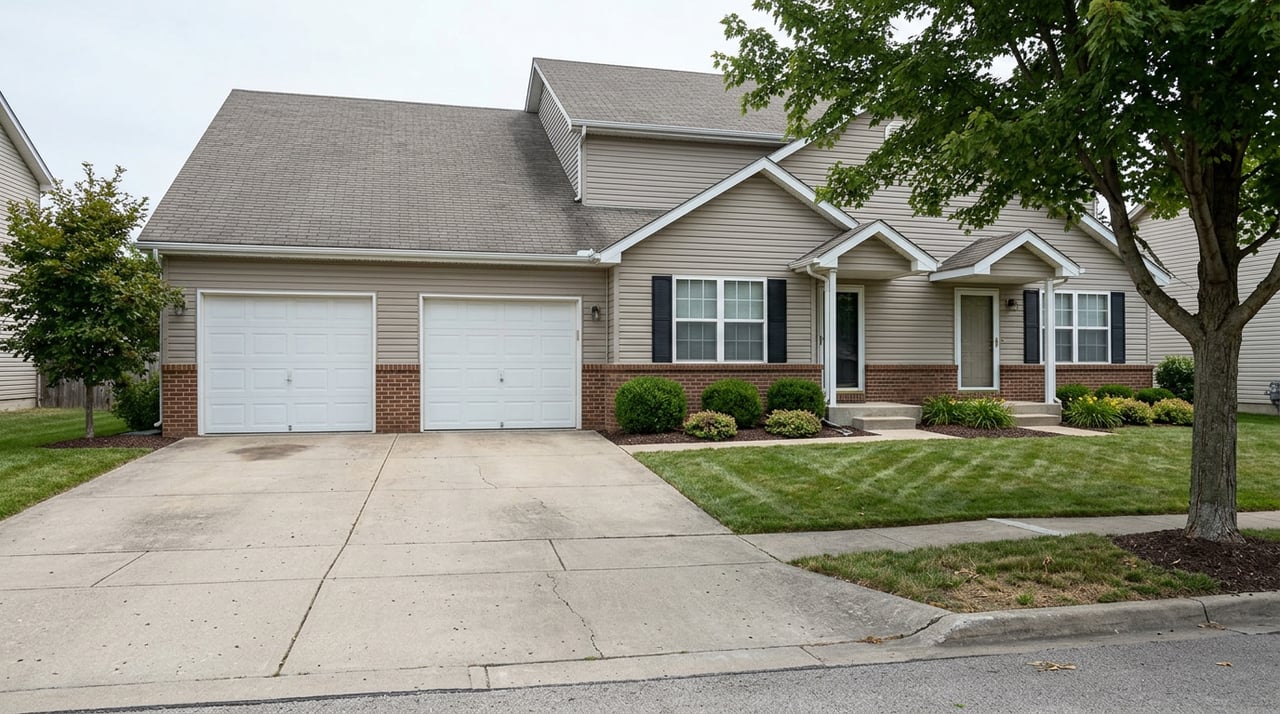
Thinking about buying a rental in Olathe? You’re not alone. With steady population growth, strong household incomes, and a diverse employment base, Olathe attracts long-term renters across ages and job types. In this guide, you’ll see what rents look like today, where returns tend to pencil out, and how to underwrite deals the right way. You’ll also get a simple plan to go from idea to keys in hand. Let’s dive in.
Why Olathe works for rentals
Olathe sits in Johnson County with an estimated population near 149,000 and household incomes above national norms. Those demographics support stable tenant demand across family households and professionals. You can confirm the latest population and income data in the city’s profile on the U.S. Census QuickFacts page for Olathe.
Local employers help, too. Corporate and manufacturing corridors, distribution hubs, and health care networks support consistent workforce housing demand. For example, Garmin’s ongoing campus investments highlight a durable tech and engineering presence in the city. You benefit from renters who value shorter commutes and suburban amenities.
Speed-to-contract varies by price point. Entry and mid-tier listings often move faster than higher-end inventory. When you underwrite, use current MLS comps for days on market in the exact neighborhood and price tier you’re targeting.
What rents look like in Olathe
Different trackers publish different numbers, so it’s smart to look at a range.
- According to RentCafe, the citywide average rent is about $1,466, with typical unit averages around $1,256 for a 1-bedroom, $1,563 for a 2-bedroom, and $2,029 for a 3-bedroom.
- Zumper’s median sits near $1,520, based on active listings at a point in time.
Each index samples data differently. Your final rent target should come from active comps in the immediate submarket plus input from a local property manager. As a quick frame of reference for underwriting:
- 1-bedrooms: roughly $1,150 to $1,350
- 2-bedrooms: roughly $1,350 to $1,650
- 3-bedrooms: roughly $1,800 to $2,200
Track short-term rent trends as well. After the 2021 to 2023 surge, recent reports show mixed, low single-digit rent growth depending on the source and unit type. New deliveries in some Kansas City submarkets may also affect near-term rent growth locally.
Will it cash flow? Underwriting snapshots
Underwriting with today’s prices and rents helps you spot where returns are likely.
Median SFR example
- Purchase price: about $425,000 (recent city median for single-family homes; public trackers like Redfin have reported a median near this level).
- Representative rent used for illustration: $1,563 per month (typical 2-bedroom average from RentCafe). Annual gross rent: $18,756.
- At a 40 percent operating expense ratio, NOI would be about $11,253. That implies a cap rate near 2.6 percent.
This example shows why many median-priced single-family homes in Olathe do not produce strong cash flow at market rents unless you buy well below market, find higher achievable rents, or optimize expenses.
Small multifamily example
- Price per unit: working average of about $100,000 to $130,000 per door for 2–4 unit buildings in the metro area, depending on condition and location. A 4-unit purchased at $120,000 per unit totals $480,000.
- Rent per unit: roughly $1,400 per month for a common 1–2 bedroom mix. Annual gross rent: $67,200.
- Using a 40 percent expense ratio, NOI is about $40,320. That’s an estimated cap rate near 8.4 percent.
While every deal is unique, smaller multifamily buildings often pencil better on a price-per-unit basis in Olathe than a median-priced single-family home.
What this means for you
- If you want cash flow, focus on price-to-rent balance. Smaller multifamily or lower-priced single-family pockets with value-add potential can work better.
- If you prioritize long-term stability and appreciation, a newer single-family rental in a subdivision may fit, even if the initial cap rate is lower.
- Always underwrite conservatively with real rent comps, realistic expenses, and lender quotes.
Cap rates, rates, and financing
Recent Kansas City metro multifamily reports point to average cap rates around 5 to 6.5 percent for larger, institutional assets, with smaller or value-add trades often wider. Your expected return will vary by condition, submarket, and execution.
Financing costs remain a key swing factor. In early March 2026, Freddie Mac’s weekly survey showed the average 30-year fixed near 6 percent nationally. Even a small rate change can move your monthly debt service and debt service coverage. Model multiple scenarios and stress test your assumptions before you write an offer.
Where to invest in Olathe
You can sort opportunities into three practical areas based on renter profiles and product types.
Historic and central Olathe
Think Downtown Olathe and nearby streets. You’ll find walkable blocks, independent restaurants, and a short drive to local employers. Renters here often value convenience and upgraded finishes in smaller homes or duplexes. Look for well-located properties where light renovations can elevate rent without overcapitalizing.
Family-focused subdivisions
These are the classic Johnson County neighborhoods with parks, trails, and larger floor plans. Renters tend to want 3 or more bedrooms and a yard. Yields may be thinner at purchase, but tenant stability can be strong. To make the numbers work, target cosmetically dated homes you can update quickly, or buy at a discount where you can control your basis.
Employment corridors and workforce pockets
Proximity to major employers and logistics hubs can support steady demand from technicians and shift workers. Garmin’s campus activity underscores a durable employment node. Smaller single-family homes, townhomes, and efficient 2-bedroom units can do well when priced for affordability and short commutes.
Costs, taxes, and rules to budget
Factor these items into every pro forma.
- Property taxes: Johnson County bills are driven by assessed value and local mill levies. Always verify the parcel’s tax history and current bill with the county before finalizing your numbers.
- Insurance and special assessments: confirm premiums, HOA dues, and any special assessments that raise annual carrying costs.
- Security deposits and state rules: Kansas law governs limits and procedures for residential deposits. Build your leasing plan to comply with state statute.
- Renovation and turns: For light, market-ready updates, plan about $5,000 to $20,000 per unit depending on age, size, and scope. Cosmetic kitchens and baths, paint, and flooring often deliver the best rent-to-cost uplift.
Risks to watch and how to de-risk
- Price-to-rent mismatch: Median single-family prices can compress cash yields. De-risk by targeting price points with better rent coverage or by focusing on small multifamily.
- New supply: Some Kansas City submarkets have seen recent deliveries. Check the pipeline in your target micro-area so you don’t assume rent growth that may slow near new builds.
- Interest-rate sensitivity: Underwrite with conservative rates and confirm your debt service coverage at higher stress-case rates.
- Taxes and assessments: Confirm current property taxes, appeal history, and any special assessments that could change your annual costs.
- Compliance: Align leases and deposit handling with Kansas statutes. Check for any city-level rental requirements before you market the unit.
Step-by-step plan to buy your first Olathe rental
- Define your strategy. Decide if you’re targeting cash flow, appreciation, or a balance. Set your buy box by price, unit type, and target cap rate.
- Build your rent comp set. Pull 6 to 10 recent active and leased comps within a tight radius and similar beds, baths, and parking. Adjust for condition and amenities.
- Model the numbers. Use conservative vacancy (4 to 8 percent), realistic management assumptions, maintenance reserves, and insurance. Add tax estimates from the county site and stress test interest rates.
- Walk condition carefully. Order inspections and get contractor bids for any health, safety, and cosmetic items. Decide what updates improve rent most per dollar.
- Write a winning offer. Use current MLS days-on-market intel, seller motivation, and repair scope to structure price and terms that fit your return target.
- Execute the make-ready. Focus on the highest-ROI updates first: clean landscaping, paint, durable flooring, lighting, and kitchen-bath refreshes.
- Market and lease. Use professional photos and clear, compliant advertising. Screen thoroughly and set a move-in schedule that minimizes downtime.
If you want a seasoned, local advocate to help you source, underwrite, negotiate, and manage the transaction details, our team is here to help. We pair neighborhood expertise with a concierge process that keeps your project on time and on budget.
Ready to explore Olathe rentals with a local team behind you? Start a conversation with the Magnolia KC Group.
FAQs
Is Olathe better for cash flow or appreciation for rentals?
- Olathe generally leans appreciation thanks to high-demand suburban fundamentals, while stronger cash flow often comes from small multifamily or lower-priced value-add single-family homes.
What cap rate should I expect in Olathe right now?
- Larger, institutional assets in the Kansas City metro have averaged around 5 to 6.5 percent recently; small properties or value-add deals can be higher depending on location and condition.
How much rent can a typical 3-bedroom home in Olathe earn?
- A practical underwriting range is about $1,800 to $2,200 per month, with final pricing set by neighborhood, condition, finishes, and parking.
What are Kansas rules for security deposits on rentals?
- Kansas statute K.S.A. 58-2550 sets limits and procedures for residential security deposits, so align your lease and move-in process with that law.
How should I estimate renovation costs for a rental turn in Olathe?
- For light, market-ready updates, plan about $5,000 to $20,000 per unit for items like paint, flooring, lighting, and modest kitchen-bath refreshes, then confirm with local bids.